
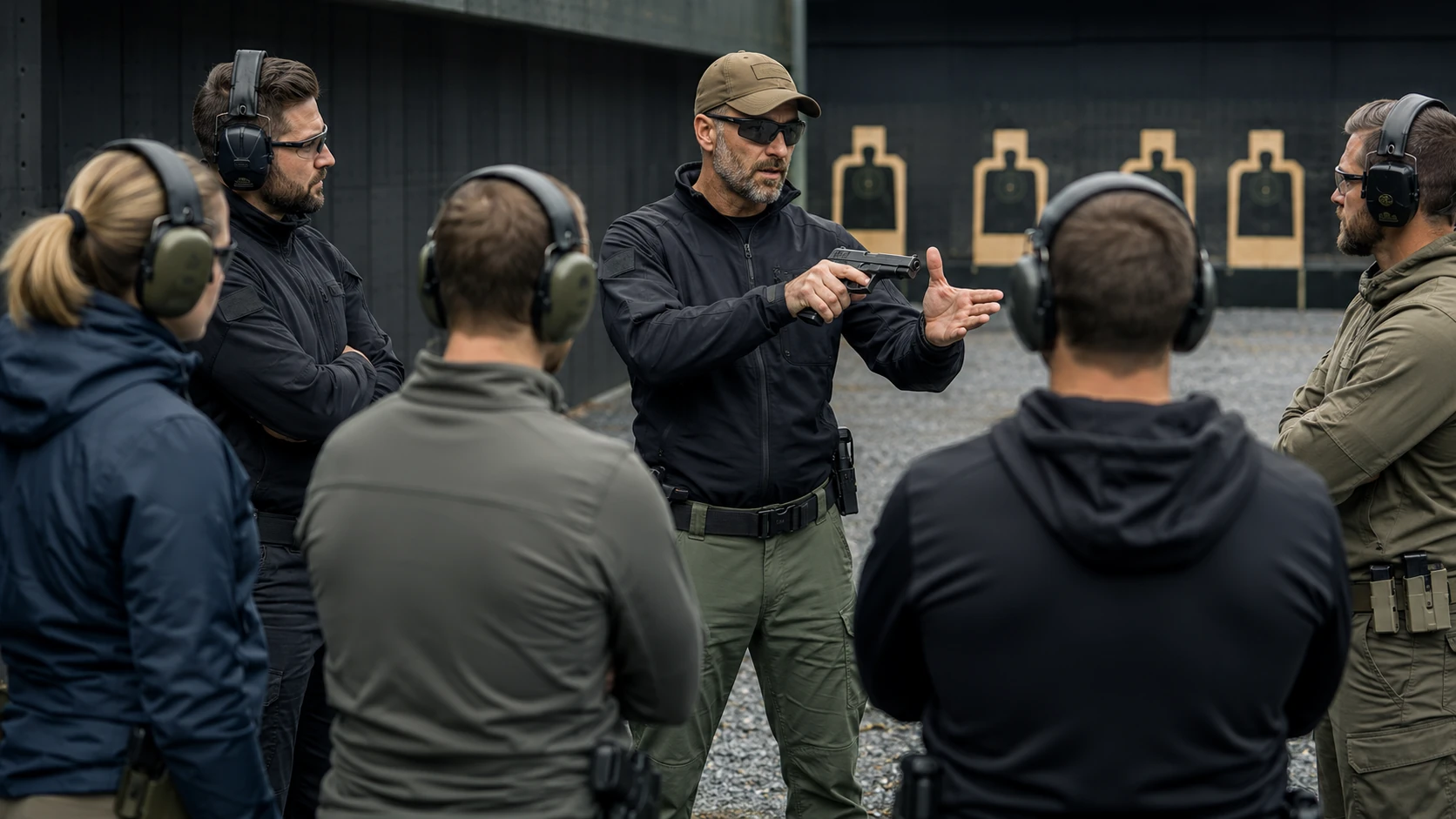
How to Become a Professional Firearms Instructor in Europe
A realistic step-by-step career pathway from strong fundamentals and mentorship to assistant roles, independent teaching and continued development.
Becoming a professional firearms instructor requires far more than shooting well or completing one certificate. The original article described a long development route: master the fundamentals, build a broad training background, attend instructor workshops, find a mentor, assist as a junior instructor, co-teach, create your own programmes and reinvest in continued learning.
It also explained the less glamorous realities: hard work, administration, marketing, travel, insurance, equipment costs, student care and the need to contribute to the training community.
This updated version preserves that complete career pathway and separates training competence from the legal authority to possess firearms or conduct commercial instruction in a particular country.
- Excellent personal firearm handling is necessary but does not automatically create teaching ability.
- A broad background should include fundamentals, platform skills, safety, first aid and relevant specialist courses.
- Mentorship, observation and assistant-instructor work are essential bridges between certification and independent teaching.
- Professional instructors need lesson planning, communication, risk management, records, insurance and business discipline.
- The strongest instructors continue training, seek feedback and reinvest in their own development.
Become an excellent and safe practitioner first
An instructor must be able to demonstrate the fundamentals slowly, clearly and repeatedly. This requires more control than simply producing a fast result for oneself.
Develop safe loading, unloading, safety checks, stance, grip, sight use, trigger control, recoil management, reloads and malfunction procedures across the platforms you intend to teach.
Performance should be measurable and consistent. Students notice when an instructor changes an explanation to excuse an unreliable demonstration.
Build a broad training background
Attend courses with different reputable instructors and organisations. Compare methods, terminology, progression and range management rather than collecting only certificates from one source.
The original article encouraged experience in handgun, rifle, shotgun, first aid, tactical subjects and related professional skills. The exact mix should match the field in which the future instructor intends to work.
Keep a training log. Record course dates, instructors, subjects, assessments and the practical lessons that changed your performance.
Complete a serious instructor-development programme
An instructor course should teach how to teach. Look for lesson structure, demonstrations, explanation, observation, correction, student differences, safety briefs, emergency procedures and assessment.
A useful programme requires teach-backs and practical evaluation, not only attendance. The candidate should deliver parts of a lesson, receive feedback and repeat the task until the standard improves.
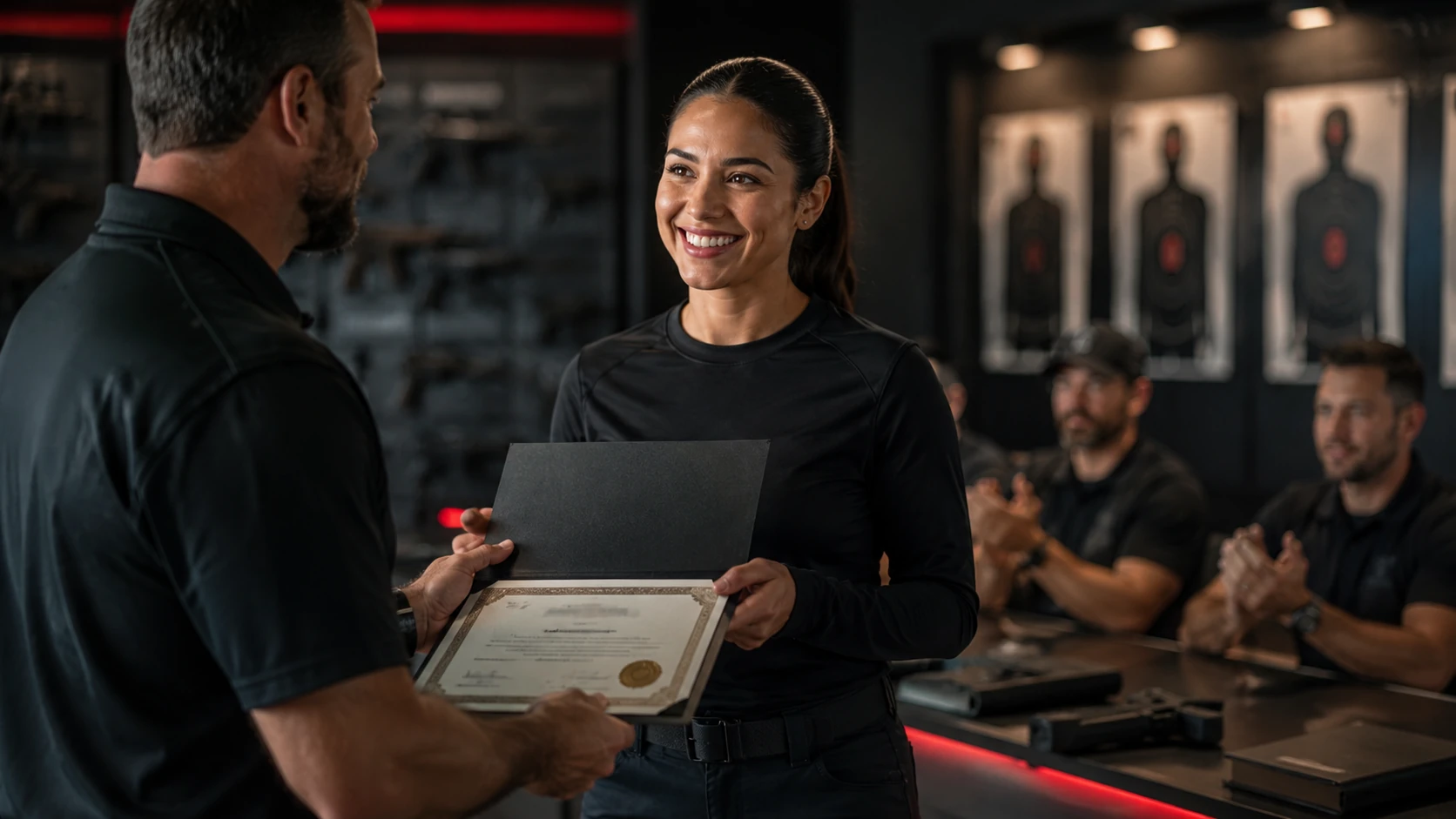
The certificate is evidence of that programme. It is not a guarantee of employment or universal legal authority.
Find a mentor and observe real courses
A mentor helps translate course theory into real student management. Observe how an experienced instructor changes the explanation, controls the firing line, handles equipment failures and supports a nervous or overconfident student.
Ask specific questions after the session rather than interrupting the lesson. Compare what was planned with what actually happened and identify why the instructor changed the pace or drill.
A good mentor also challenges weak habits and gives honest feedback that a friend may avoid.
Work as a junior or assistant instructor
Assistant work is the safest environment for developing responsibility. Tasks may include preparing equipment, checking paperwork, helping with protective gear, observing one student, managing targets and reinforcing a demonstration under the lead instructor's direction.
Do not treat the role as unpaid access to shooting. The priority is student support, logistics and safety. Much of professional instruction happens before and after the firing line.
The lead instructor should gradually increase responsibility as the assistant demonstrates reliability and sound judgement.
Co-teach complete lessons
The next step is delivering defined parts of a real course while a senior instructor observes. Prepare a lesson plan, define the objective, demonstrate the skill, manage practice and evaluate whether the students achieved the standard.
Afterwards, complete a structured debrief. Identify what students misunderstood, where time was lost, which safety controls worked and what should change next time.
Repeated co-teaching develops confidence without leaving the new instructor alone with problems they have never managed.
Move into independent instruction carefully
Independent teaching requires a lawful venue, firearms and ammunition arrangements, insurance, medical planning, written safety procedures, booking terms, records and a curriculum that matches the students.
Start with subjects you can genuinely teach and class sizes you can safely manage. Do not advertise advanced tactical expertise merely because you attended a short course.
Consider working under an established academy, club or range before operating a separate business. The infrastructure and supervision can reduce avoidable risk.
Administration, marketing and customer care
A professional instructor answers enquiries, checks prerequisites, manages payments, prepares equipment, documents incidents, maintains firearms, orders ammunition and communicates changes. Teaching is only one part of the role.
Marketing must be accurate. Avoid exaggerated claims, copied military imagery and promises that a certificate creates legal authority. Clear course pages and honest reviews build stronger long-term trust.
Customer care includes supporting complete beginners, international visitors and students who learn at different speeds without lowering the safety standard.
Reinvest in lifelong development
The original article emphasised that professional instructors never finish learning. Travel, attend courses, study coaching, improve first aid, train with stronger practitioners and revisit the foundation.
Set aside part of the income for training, insurance, equipment and professional development. An instructor who spends everything on marketing and nothing on competence will eventually fall behind.
Seek feedback from students and peers but evaluate it critically. Popularity and instructional quality are not always the same thing.
Build relationships in the training community
Professional networks create opportunities to assist, refer students, share facilities and learn. Treat other instructors as potential colleagues rather than automatic competitors.
Give credit for methods and material. Do not copy another academy curriculum or present a short exposure to a system as instructor-level expertise.
Reliable behaviour, clear communication and respect for students build a reputation more effectively than dramatic social-media content.
A practical instructor-development plan
- Master safe fundamentals and measurable personal performance.
- Train broadly with reputable instructors and keep records.
- Complete a course that assesses teaching, not only shooting.
- Find a mentor and observe real students.
- Assist with logistics, safety and individual coaching.
- Co-teach defined lessons and complete debriefs.
- Begin independent work only with the legal, insurance and facility requirements in place.
- Reinvest continuously in knowledge, skill and the professional community.
Professional instruction is a responsibility earned over time
The realistic route is long and practical. Learn, practise, attend a genuine instructor programme, work under experienced people and prove that you can keep students safe while helping them improve.
The BZ Academy pathway can provide training and development, but no course can replace experience, legal compliance, humility and continued work. The best instructors remain students throughout their careers.