
What Tactical Training Gear Should I Get?
A complete guide to clothing, footwear, eye and ear protection, gloves, belts, holsters, slings, pouches and optional tactical equipment.
New students often assume they must purchase a full tactical setup before attending a firearms course. The original BZ Academy article made the opposite point: the academy provides the core firearms, ammunition and training equipment needed for its all-inclusive courses, so a beginner can attend without spending heavily on specialist gear.
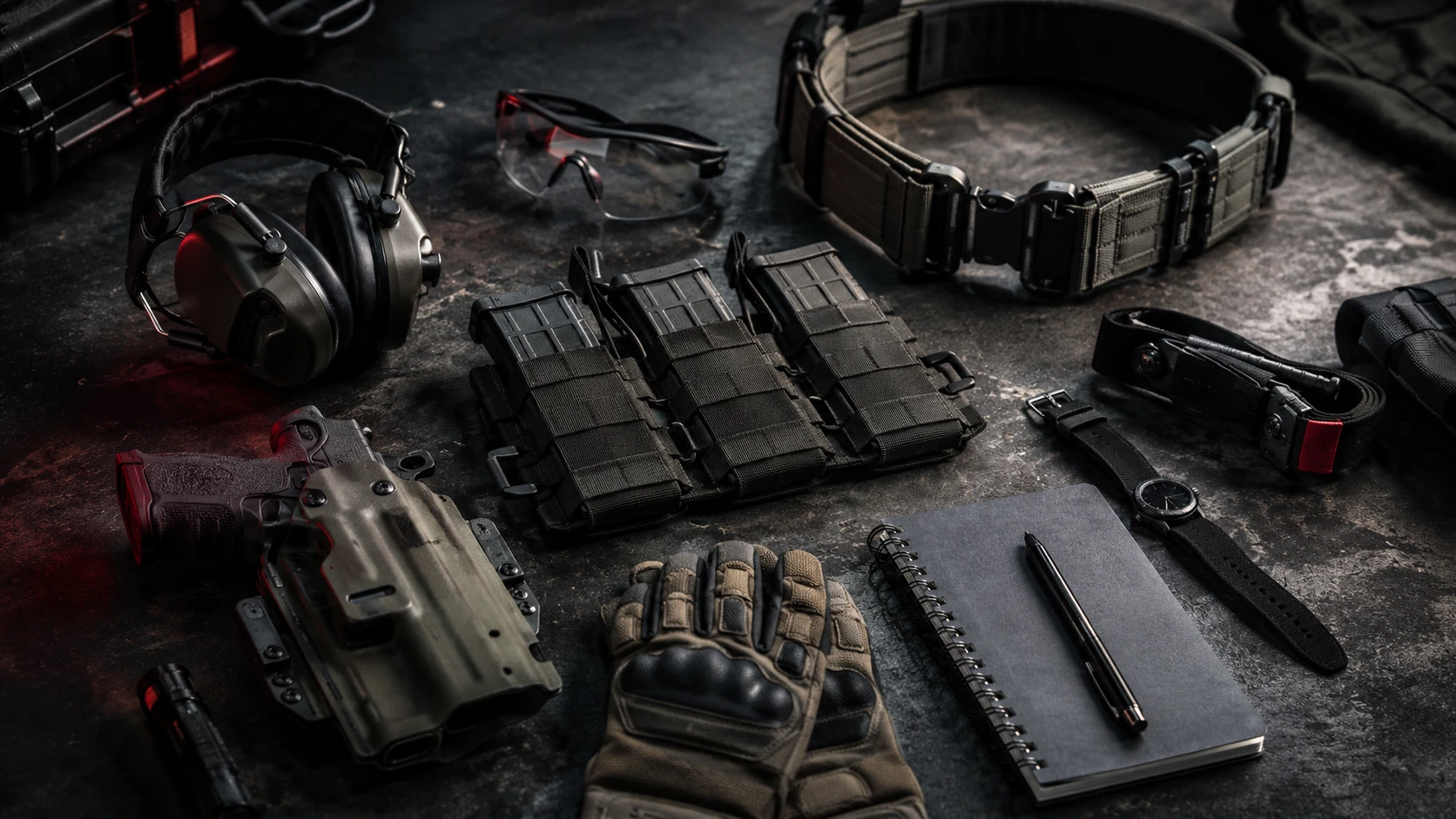
Personal equipment becomes useful when it improves comfort, fit, hygiene or consistency. Clothing, footwear, eye and ear protection, gloves and a belt system are the items most likely to affect the training experience.
This guide preserves the original recommendations, including slings, magazine pouches, vests, first-aid equipment and example brands, while separating essentials from optional purchases.
- Do not buy an expensive setup before understanding the course and your own needs.
- Comfortable weather-appropriate clothing and secure footwear are more important than a tactical appearance.
- Eye and hearing protection must fit correctly and remain comfortable for a full training day.
- A stable belt, compatible holster and magazine pouches become useful when the course includes repeated manipulations.
- Body armour, plate carriers and specialist equipment are optional unless the specific course says otherwise.
What BZ Academy provides
All-inclusive course arrangements normally include the firearms, ammunition and core range equipment specified for the programme. Loan equipment may include holsters, belts, magazine pouches, slings and protective items, depending on the course and availability.
Students should read the course page and confirmation carefully. If a required item is not clear, ask before purchasing. It is better to borrow a suitable setup during the first course and learn what fits than to arrive with expensive equipment that is uncomfortable or incompatible.
Personal firearms and equipment can be used only when agreed in advance and when they comply with the legal, range and course requirements.
Clothing for a full training day
Choose durable clothing that allows bending, kneeling, reaching and repeated movement. Avoid garments that expose skin around the collar or waist where hot cartridge cases can become trapped.
Outdoor conditions in Poland can change during the day. Layers are more useful than one heavy garment. Bring a waterproof outer layer, warm clothing for colder months and breathable layers for summer.
Camouflage is not required. Neutral outdoor, workwear or tactical trousers and a comfortable long-sleeve top are suitable. The priority is function, not appearance.
- Trousers with enough movement and strong belt loops.
- A fitted base layer and an insulating layer when conditions require it.
- A waterproof or windproof outer layer.
- A hat or cap suitable for the season.
- Spare socks and a change of clothing after wet or muddy training.
Boots and footwear
Footwear should provide grip on gravel, mud, grass and range surfaces. It should support the ankle without restricting natural movement and should already be broken in before the course.
Heavy military boots are not mandatory. Quality hiking, approach or tactical boots can all work. Avoid smooth soles, open shoes and unfamiliar footwear that creates blisters during a long day.
Water resistance is valuable for outdoor courses, but breathability and fit remain more important than a particular label.
Eye and hearing protection
Protective eyewear must cover the eyes securely and remain clear in changing light. Interchangeable lenses or a clear lens are useful for indoor, shaded and low-light areas. Prescription shooters should arrange compatible protection.
Hearing protection can be passive earmuffs, electronic earmuffs or properly fitted earplugs. Electronic muffs make instructions and range commands easier to hear while reducing damaging impulse noise.
Comfort matters because the equipment will be worn for many hours. Check that glasses do not break the earmuff seal and that the stock of a rifle does not push the earmuff out of position.
Training gloves
Gloves can protect the hands from heat, sharp edges, rough barricades and cold weather. They can also reduce tactile feedback and interfere with small controls when the fit is poor.
Choose close-fitting gloves with enough dexterity to operate the firearm safely. Practise loading, unloading and using the safety equipment while wearing them before the course.
Bring a spare pair if the course is likely to be wet. Soaked gloves can become uncomfortable and less secure.
Belt, holster and magazine pouches
A rigid shooting belt keeps the holster and pouches stable during draws, reloads and movement. A two-piece inner and outer belt is convenient for courses because it can be removed without taking every pouch off the belt.
The holster must be designed for the exact handgun and retain it securely. It should cover the trigger guard and remain open when the pistol is removed. Cheap universal fabric holsters are unsuitable for repeated professional training.
Magazine pouches should retain magazines while allowing a consistent grip. The layout should be simple. More pouches do not automatically produce better performance.
- Confirm holster compatibility with the pistol, optic and weapon light if fitted.
- Avoid cross-draw, shoulder or concealment setups unless the course specifically permits them.
- Keep the belt clear of loose straps and items that interfere with the draw.
- Place medical equipment where it is accessible but does not obstruct movement.
Slings and rifle magazine pouches
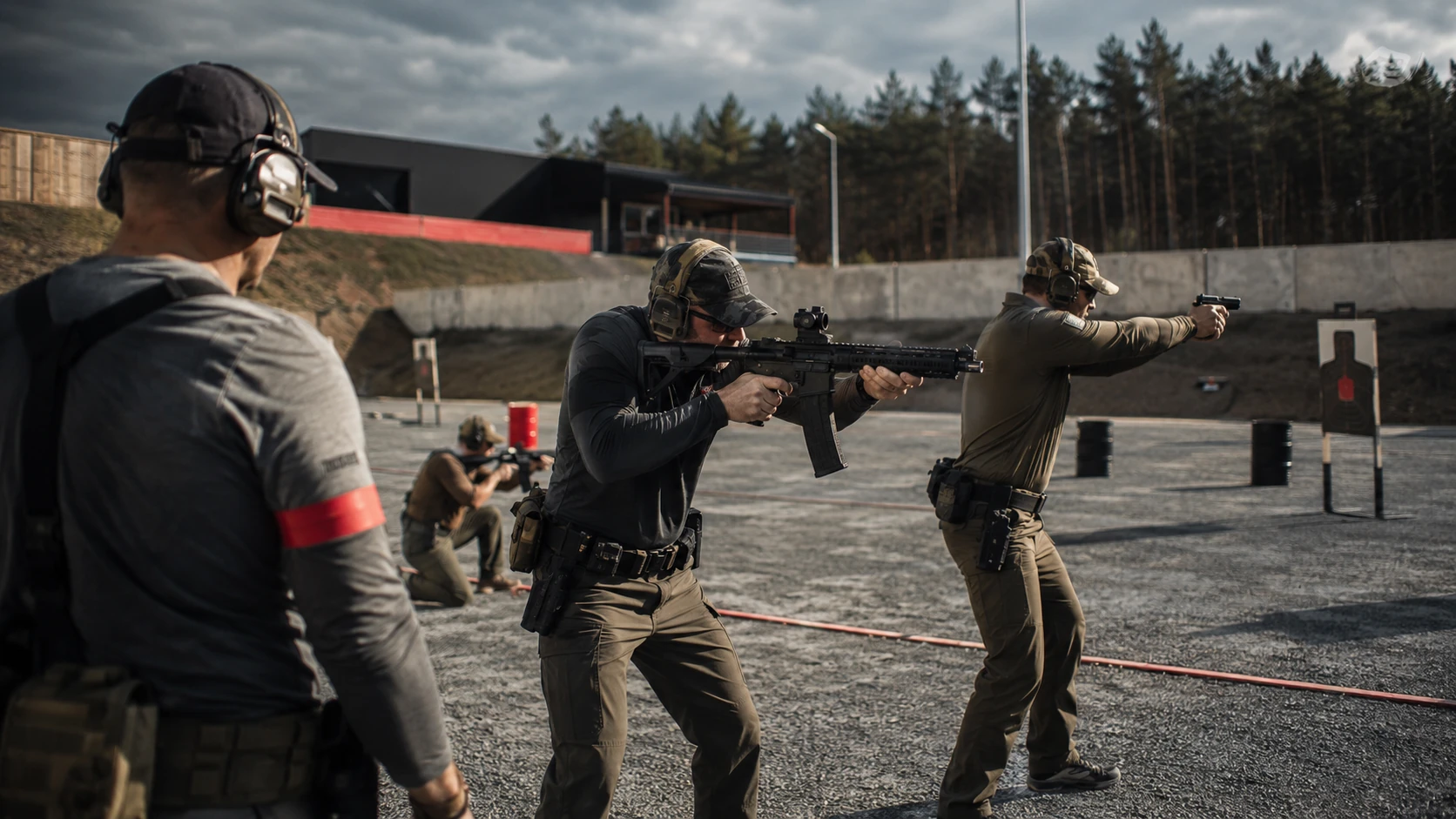
A two-point adjustable sling is a practical general-purpose choice. It supports the rifle, allows controlled transitions and can be tightened or loosened as the exercise changes.
Single-point slings may feel quick but allow the rifle to swing more freely. Three-point slings can add complexity. The correct choice depends on the course, firearm and student experience.
Rifle magazine pouches should match the magazine type and provide secure retention. Test the pouch with the actual AR-15 or AK magazine because dimensions and locking tabs differ.
Chest rigs, tactical vests and plate carriers
A simple chest rig can carry magazines and equipment when the belt does not provide enough capacity. It should allow normal breathing, shoulder movement and access to the belt.
Plate carriers and body armour add weight, heat and restricted movement. They are useful only when the training objective requires them or when the student has a professional reason to practise in that equipment.
Do not add steel or training plates merely to look tactical. If armour is used, confirm the range policy and make sure the student is physically prepared for the added load.
First aid, hydration and useful small items
The academy has course medical arrangements, but students may carry their own individual first-aid kit if they are trained to use it. A tourniquet should come from a reputable manufacturer and should not be treated as a decorative accessory.
Water, snacks, sun protection, insect repellent, medication and a notebook often provide more practical value than another tactical pouch. Bring cleaning cloths for glasses and a small towel for wet conditions.
Example manufacturers mentioned in the original article included well-known outdoor and tactical brands. Brand is secondary to fit, compatibility and reliable construction.
A sensible equipment purchasing plan
- Attend or confirm the course. Understand the exact equipment list.
- Start with clothing and footwear. These affect every hour of the training day.
- Choose personal eye and ear protection. Fit and hygiene make them worthwhile early purchases.
- Add a belt and holster. Buy only after the pistol or loan platform is known.
- Add pouches and a sling. Keep the layout minimal and test it during training.
- Delay specialist gear. Purchase armour, chest rigs and advanced accessories only when a real training need appears.
The right gear should make training safer and simpler
A beginner does not need a complete tactical wardrobe to attend BZ Academy. Start with weather-appropriate clothing, secure footwear and comfortable protective equipment, then use the course to discover what additional items genuinely improve performance.
Buy slowly, test everything and prioritise compatibility. The best setup is the one that stays secure, allows safe movement and does not distract from learning.