
How to Perform a Firearm Safety Check on Pistols and Rifles
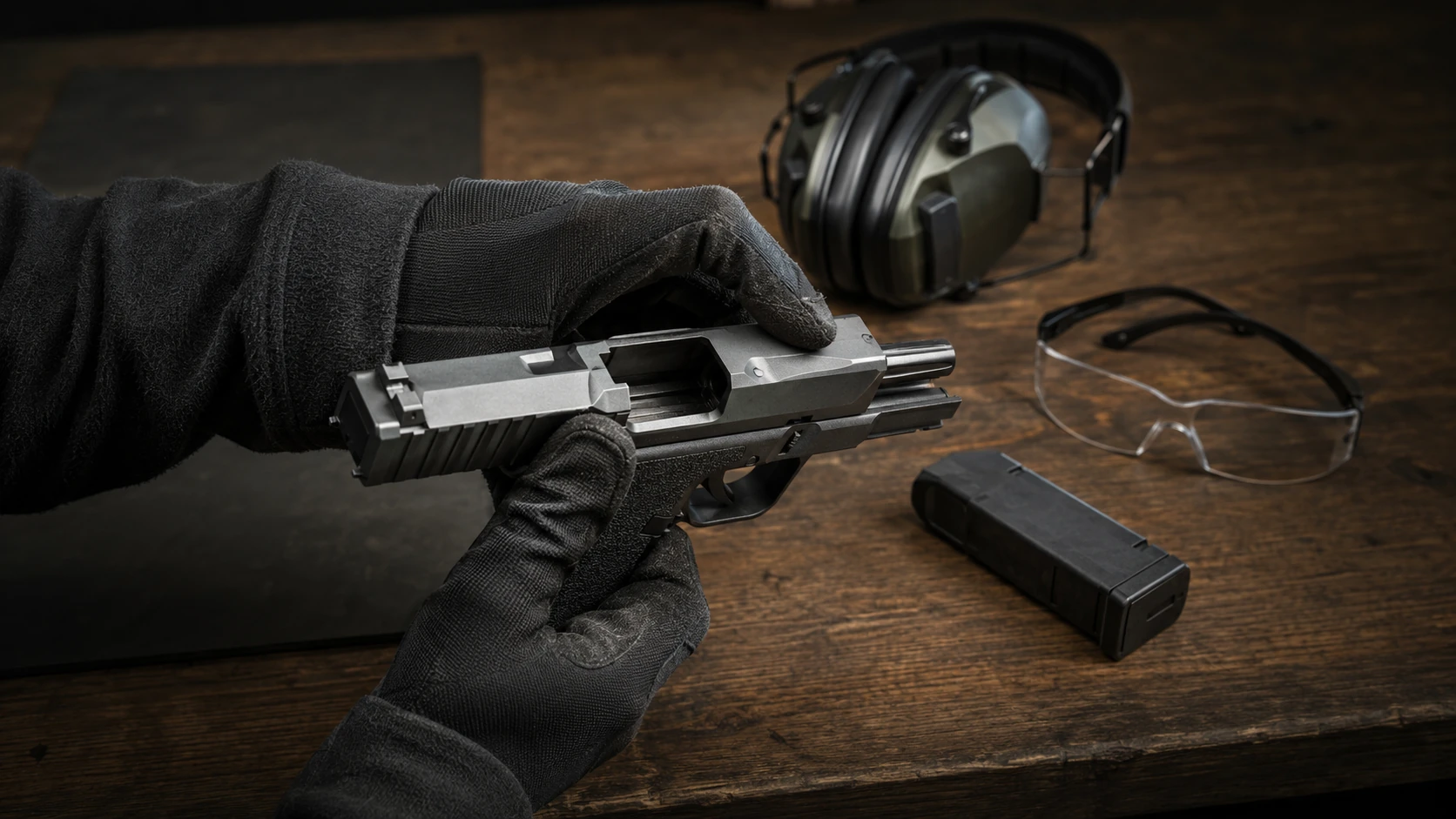
A safety-first explanation of muzzle direction, magazine removal, opening the action and physically and visually verifying the chamber.
A safety check is the deliberate process used to establish the condition of a firearm before handling, storage, maintenance, transport or training. The original article explained the same core sequence for pistols and rifles: control the muzzle, remove the source of ammunition, open the action and inspect the chamber.
The exact controls differ between firearm models. This guide describes general principles and must not replace the manufacturer manual, range rules or direct instruction. If you are unfamiliar with a firearm, leave it in a safe direction and ask a qualified instructor for help.
Never rely on memory, another person statement or the position of a safety lever. Treat the firearm as loaded until you personally complete the appropriate check.
- Keep the muzzle in a direction where an unintended discharge would cause the least possible harm.
- Keep the trigger finger straight and outside the trigger guard throughout the check.
- Remove the magazine or other ammunition source before opening the action.
- Lock or hold the action open and visually and physically inspect the chamber and feeding area.
- Follow the manufacturer procedure and obtain instruction when the firearm is unfamiliar or damaged.
What is a safe direction?
A safe direction is one in which an unintended discharge is least likely to injure a person or cause serious damage. It is not simply up or down. Floors, ceilings, walls, vehicles and outdoor surfaces can deflect or fail to stop a projectile.
On a range, the designated backstop is normally the safe direction. At home or in another environment, the safest available direction depends on construction, people and surroundings. This is one reason handling outside a controlled range requires particular care.
Maintain muzzle control for the entire process. A firearm does not become safe because the magazine has been removed.
Apply the fundamental safety rules
- Treat every firearm as loaded until its condition has been personally verified.
- Never allow the muzzle to cover anything you are not prepared to damage.
- Keep the finger straight and outside the trigger guard until an authorised firing decision has been made.
- Be certain of the target, foreground and background during live fire.
- Stop when another person, equipment problem or uncertainty makes the procedure unsafe.
Safety-checking a semi-automatic pistol
Point the pistol in the designated safe direction and keep the trigger finger high on the frame. Engage the manual safety if the model has one and the manufacturer procedure calls for it.
Remove the magazine. Do not assume this unloads the pistol; a cartridge may remain in the chamber. Move the slide fully to the rear and lock it open when the design permits.
Inspect the chamber, breech face and magazine well. Use both sight and touch when appropriate and safe, keeping the muzzle controlled. The chamber should be empty, the magazine well clear and no cartridge should be trapped in the action.
Keep the action open or continue according to the range or storage procedure. Do not pull the trigger as a generic final step unless the specific supervised procedure and manufacturer instructions require it.
Safety-checking a magazine-fed rifle
Control the muzzle and place the rifle so the action can be operated without covering another person. Keep the finger outside the trigger guard.
Remove the magazine and operate the charging handle or bolt fully. Lock the action open when the firearm design allows it.
Inspect the chamber, bolt face and magazine well. On some rifles the angle makes visual inspection difficult, so a suitable chamber flag, light or physical check may be used according to range procedure.
A rifle with a fixed magazine, tube magazine or different action type requires a different unloading method. Follow the manufacturer instructions and do not improvise.
Revolvers, shotguns and unfamiliar firearms
For a revolver, open the cylinder in the safe direction and inspect every chamber. For a break-action shotgun, open the action and inspect both chambers. Pump, lever, bolt and semi-automatic shotguns have different magazine systems and may retain cartridges outside the chamber.
The universal logic remains the same: control direction, remove ammunition sources, open the action and verify every place a cartridge can be present.
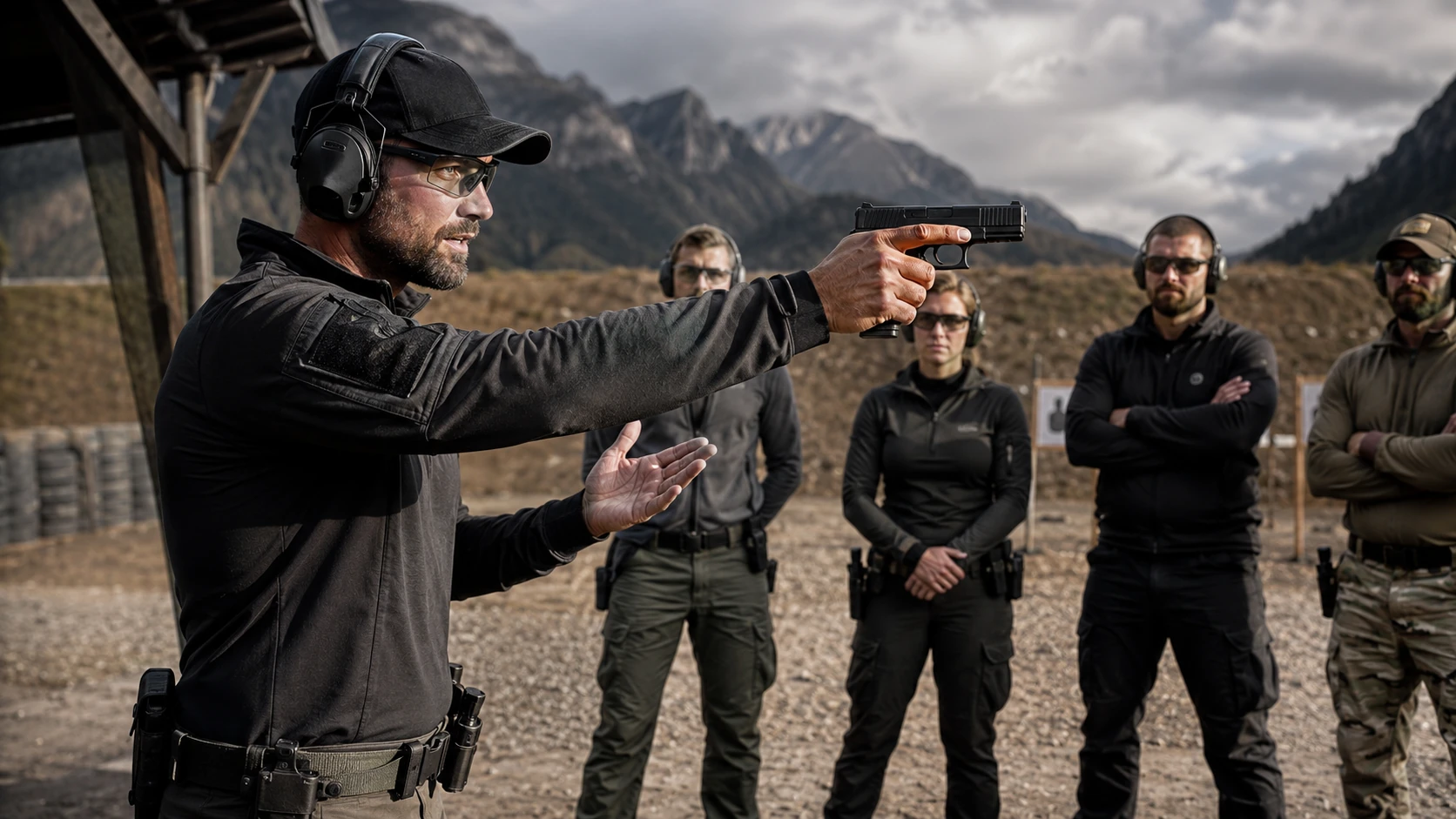
When the controls are unfamiliar, the correct action is to stop. Ask the owner, range officer or instructor to demonstrate the model while maintaining muzzle control.
Common safety-check mistakes
- Removing the magazine and forgetting the chambered cartridge.
- Cycling the action before removing the magazine, which can feed another cartridge.
- Looking into the chamber without controlling the muzzle or finger.
- Checking only once after another person has handled the firearm.
- Failing to inspect the magazine well or feeding area.
- Using a memorised sequence on an unfamiliar action without reading the manual.
- Allowing distraction or conversation to interrupt the check.
How to present a cleared firearm
On a range, a cleared firearm is normally presented with the action open and the muzzle directed safely. A chamber flag may be required. The receiving person should still perform an independent check rather than relying on the previous handler.
Do not pass a firearm with the muzzle sweeping hands or bodies. Where possible, place it on the bench in the approved orientation and allow the next person to take control.
Range commands take priority. Different facilities may have specific procedures for benches, racks, cases and ceasefires.
Learn under supervision and practise deliberately
A safety check should be calm and consistent, not rushed. Learn the procedure with an unloaded training setup under a qualified instructor and repeat it until the sequence can be completed without losing awareness of the muzzle or trigger finger.
Use the same standard when a firearm comes out of a case, changes hands, is prepared for cleaning or is returned to storage. Rechecking is not distrust; it is normal professional behaviour.
If the firearm is damaged, obstructed or cannot be opened normally, stop handling it and seek qualified assistance.
A safety check protects everyone around the firearm
The sequence is simple in principle but depends on disciplined muzzle control and attention. Remove the ammunition source, open the action and verify the chamber and feeding area while keeping the finger away from the trigger.
Practise the procedure under supervision and repeat it whenever firearm control changes. A responsible shooter would rather check twice than rely on an assumption once.