
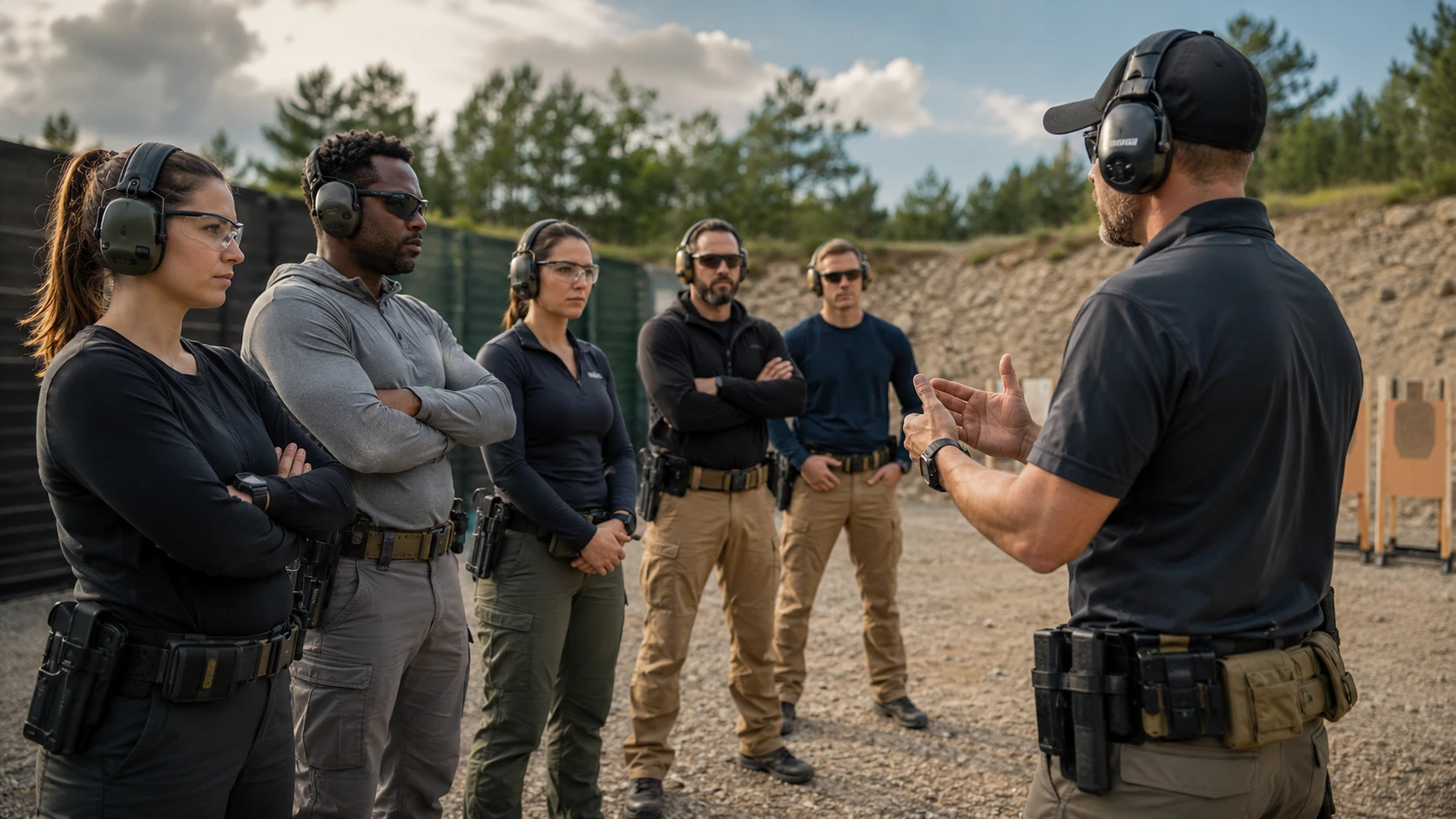
Tactical Training Courses for Civilians in Europe
How civilians can access lawful firearms and tactical training in Europe, what prerequisites apply and how to progress safely.
Civilians in Europe often assume that tactical firearms courses are available only to military, Police or licensed security professionals. The reality depends on national law, range permissions and the subject of the programme, but lawful private training is available in several countries, including Poland.
The original article explained that civilians can begin with fundamentals and progress into movement, vehicle, close-quarter and other tactical subjects when they meet the safety and experience requirements. It also stressed that professional material must be adapted to the lawful civilian context.
This version preserves that progression and provides a clearer method for choosing a provider and understanding what tactical training can and cannot offer.
- Civilian access depends on the law, provider, range and exact training activity.
- A complete beginner should start with safety and marksmanship rather than advanced scenario training.
- Intermediate courses add movement, reloads, malfunctions, positions, barricades and transitions.
- CQB and vehicle programmes require strong handling because firearms are used in restricted spaces.
- Training should improve lawful decision-making, safety and competence, not encourage imitation of military operations.
Where tactical training is available
European firearms laws are national rather than identical. A course that is lawful in Poland may be restricted or structured differently elsewhere. Providers must operate under the licences, range permissions, insurance and firearm-control rules of their country.
Poland offers a practical environment for international civilian students because licensed providers can deliver structured pistol, rifle and tactical programmes on suitable ranges. Students can normally use academy firearms and ammunition under supervision.
Access does not mean every subject is appropriate for every person. Providers should screen experience and reserve advanced material for students who can handle firearms safely.
Start with firearms fundamentals
The beginner stage covers safety rules, loading, unloading, safety checks, stance, grip, sights, trigger control, recoil management and basic accuracy. These skills are not separate from tactical performance; they are the foundation of it.
Students who cannot manipulate a firearm safely while standing still should not attempt movement, confined-space or team exercises. Increasing complexity does not hide weak fundamentals; it exposes them.
A combined pistol and rifle course can help the student understand different platforms before choosing a specialist direction.
Intermediate skills before tactical scenarios
Intermediate programmes develop efficient ready positions, reloads, malfunction management, alternative positions, use of cover, changes in distance and controlled movement.
These courses teach the student to maintain muzzle and trigger discipline while attention is divided between the firearm, target, environment and instructor commands.
Performance standards should remain measurable. Accuracy and safe manipulation are more important than looking fast.
CQB, vehicle and team-related training
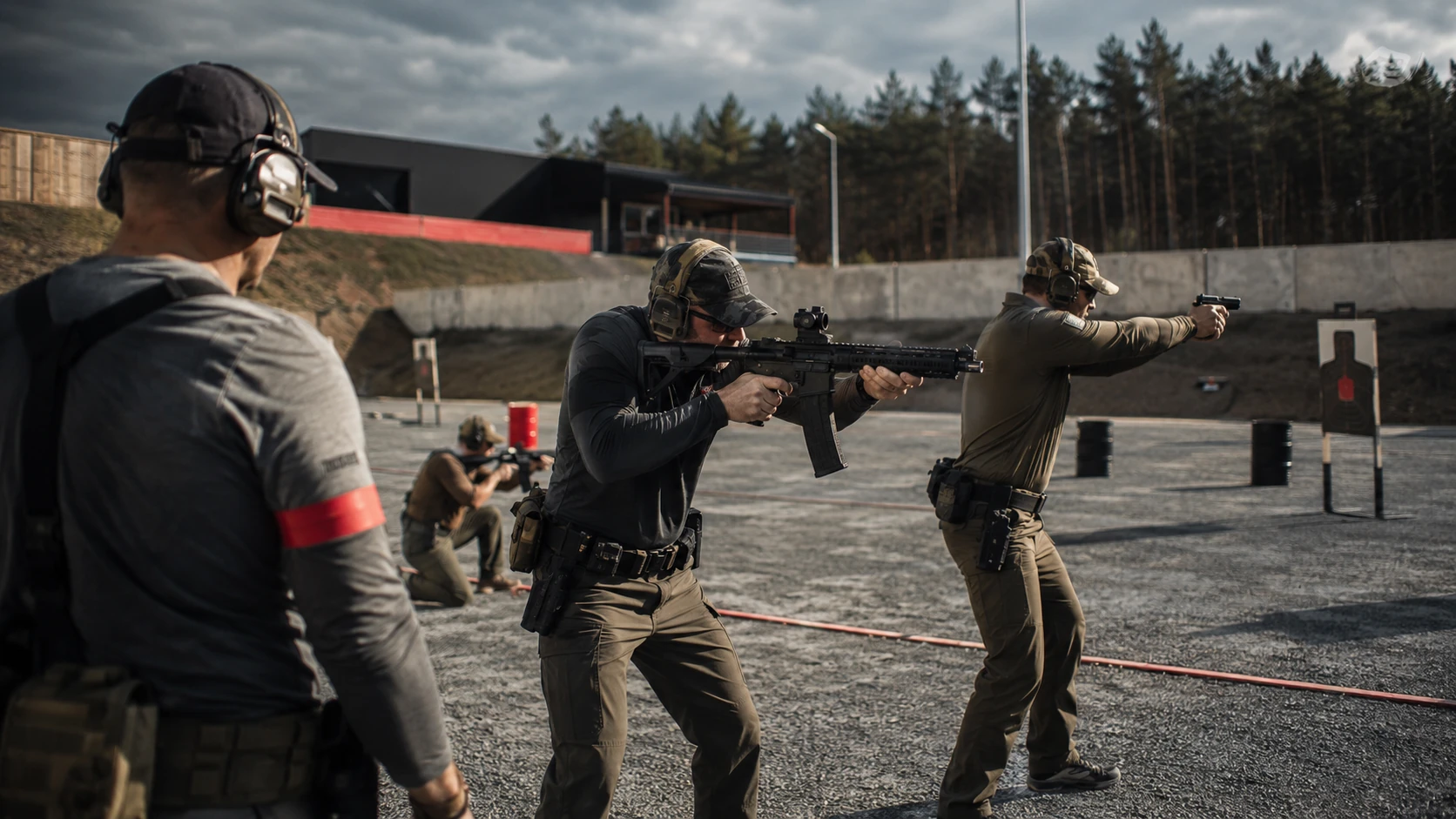
Close Quarters Battle and Vehicle CQB introduce restricted space, changing angles and more demanding movement. Depending on the programme, students may work around doors, rooms, barricades or vehicles and may coordinate with another participant.
The purpose for civilian students is not to imitate military raids. It is to understand firearm control, movement, communication and decision-making in constrained environments within a lawful training context.
Providers may use dry practice, inert training guns, FX Simunition or live fire in different parts of the programme. Each method requires specific safety controls.
Civilian training is not military training
Military and Police units operate under missions, authority, equipment and team structures that civilians do not have. Techniques must be evaluated against the lawful civilian situation rather than copied without context.
A civilian course should emphasise avoidance, safe storage, responsible firearm access, communication, identification and the legal consequences of any defensive decision. National self-defence law must be taught or verified through qualified local sources.
The strongest civilian training develops judgement and restraint alongside technical skill.
What a provider should require
- Legal eligibility to participate in the training and use the supplied equipment.
- Completion of a relevant fundamentals course or evidence of equivalent recent ability.
- Safe loading, unloading, safety checks and muzzle management without constant intervention.
- Physical ability appropriate to movement, kneeling, confined spaces or vehicle work.
- Willingness to follow instructions and stop immediately on command.
- Suitable protective equipment and clothing.
- Honest disclosure of medical limitations and previous experience.
How to choose a tactical training provider
The provider should explain who the course is for, what prerequisites apply, how many students attend and which safety methods are used. Phrases such as operator, combat or elite do not prove teaching quality.
Ask about instructor experience, but also ask how they teach civilians. Operational experience is valuable only when it can be converted into safe, understandable instruction.
Review the schedule and equipment included. A credible provider is transparent about what the student will actually practise and what the course does not qualify the student to do.
- Clear written curriculum and level.
- Realistic student-to-instructor ratio.
- Progressive dry and live practice.
- Medical and emergency plan.
- Suitable range and insurance arrangements.
- No promise of legal authority or employment from attendance alone.
Suggested civilian training progression
- Marksmanship and safe handling.
- Platform-specific pistol or rifle development.
- Skills builder with reloads, positions, movement and malfunctions.
- Use of cover, low light or concealed-carry concepts where lawful.
- Introductory CQB or vehicle training after prerequisites are met.
- Periodic repetition, private coaching and scenario work appropriate to the student.
Realistic outcomes
A course can improve understanding, expose weaknesses and provide coached repetitions. It cannot create automatic competence in a few days, guarantee performance under real stress or replace regular practice.
Certificates document attendance or assessment but do not grant military, Police or security authority. Employment and firearm possession remain subject to national law and employer requirements.
The correct outcome is a safer student with a clear practice plan and an honest understanding of the next step.
Civilians can access serious training without pretending to be professionals they are not
Lawful civilian tactical courses can provide valuable firearm handling, movement and decision-making experience. The standard should remain professional even when the student is not military or Police.
Start with fundamentals, respect prerequisites and select a provider that adapts the material to civilian needs. Progress comes from repeated safe training, not from the title of a single course.