
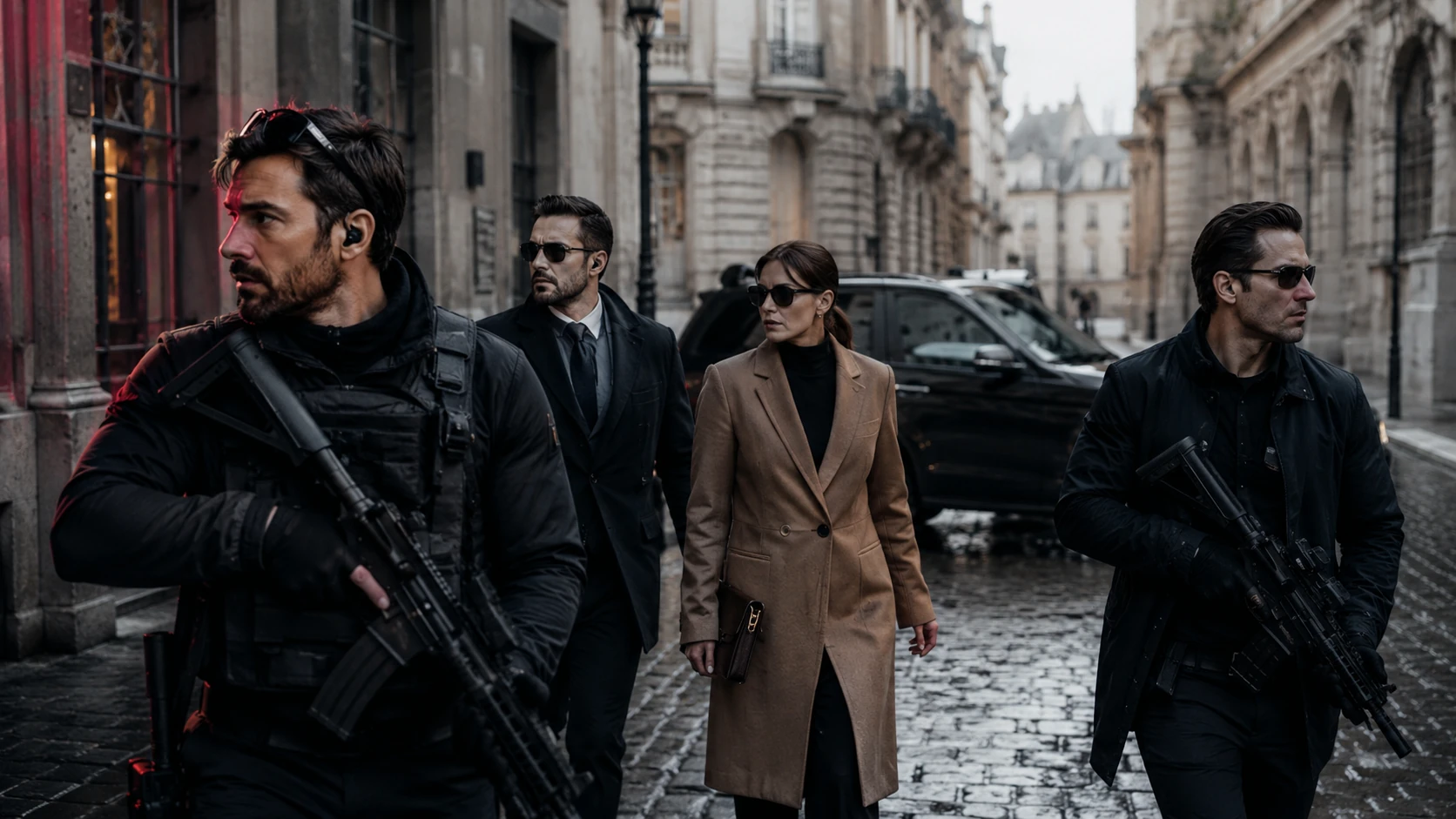
Armed Close Protection Training in Europe
What armed close protection training covers, who it is for, and how the five-day BZ Academy programme combines practical protective skills.
Close protection courses are available in many countries, but the legal ability to work armed varies significantly. In the United Kingdom, for example, private close protection operatives do not normally carry firearms. In higher-risk regions, however, armed capability may be required by the role, the contract or the threat level.
The original article explained why BZ Academy developed a Close Protection Firearms and Tactics course for people who want practical experience in higher-risk protective work. It also described the five-day schedule, the testing process and the fact that most of the programme is practical rather than classroom based.
This updated version preserves those details while making clear that completing training does not override national licensing, employment or firearms laws.
- Armed close protection is relevant mainly in countries and contracts where lawful armed work is permitted.
- The BZ Academy programme combines protective formations, firearms, vehicle drills, threat response, defensive tactics and first aid.
- Around 90 percent of the course is practical and scenario based.
- No previous close protection qualification is required, although solid pistol fundamentals are strongly recommended.
- Certification depends on passing theory, practical protective drills, shooting and defensive tactics assessments.
Where armed close protection fits
The close protection profession covers a wide range of environments. A low-risk corporate assignment in Europe may involve planning, communication, route management and professional presence without any firearm. A high-risk overseas contract may require the team to work around weapons, vehicles, hostile surveillance and a direct threat to the principal.
Training should therefore match the intended employment environment. A person who already holds an SIA close protection qualification may attend an armed tactics programme to add practical firearms handling and higher-risk protective skills. A beginner may also attend the BZ Academy course because the fundamentals are included, but progress into live-fire protective drills depends on safe performance.
Why the course is built around realistic protective tasks
The programme was developed around experience from higher-risk countries and is designed to move beyond a purely classroom qualification. A short theory component introduces the role, but the majority of time is spent applying protective principles in realistic exercises.
Students practise planning, foot formations, team roles, threat assessment, evacuation, vehicle entry and exit, firearms handling, defensive tactics and first aid. Scenarios are used to test whether participants can communicate and move as a team while protecting the principal.
- VIP foot formations for small and larger teams.
- Correct planning, positioning and team responsibilities.
- Responding to threats and evacuating the principal.
- EMBUS and DEBUS drills around vehicles.
- Live-fire protective drills and concealed-carry work.
- Krav Maga based responses to unarmed, knife, stick and pistol threats.
- Attack-on-principal scenarios using training systems where appropriate.
- First aid, written knowledge and practical testing.
Who can attend
The course is open to people without a previous close protection qualification. It is also regularly attended by people who have already completed an SIA or other CP programme and want to build firearms and higher-risk practical skills.
No-experience entry does not mean that every participant immediately performs every advanced drill. The instructor team develops students progressively. Anyone who cannot maintain the required firearms safety standard will not take part in live-ammunition VIP drills until the necessary control is demonstrated.
How the course is structured
- Day 1 - Foundations. Introduction to close protection, VIP+1 and VIP+2 concepts, basic formations, firearms dry training, shooting fundamentals and introductory defensive tactics.
- Day 2 - Team roles and threat response. Larger foot formations, engaging multiple targets, movement with firearms, response-to-threat drills and protection against a knife attack.
- Day 3 - Threat assessment and vehicles. BOX and DIAMOND formations, EMBUS/DEBUS procedures, one-handed shooting, teamwork and protection against an impact-weapon attack.
- Day 4 - Advanced protective scenarios. Attack-on-principal drills, practical assessment, concealed-carry techniques and responses to pistol threats.
- Day 5 - Testing and graduation. Defensive tactics teamwork test, written assessment, live-fire evacuation assessment, shooting qualification and course debrief.
Safe gun handling inside a protective team
Armed close protection is not simply a pistol course with a VIP standing nearby. The operator must know when a firearm can be used, how to move without endangering the principal or team, how to communicate and how to evacuate rather than becoming fixed in an unnecessary engagement.
The programme therefore combines individual fundamentals with directional shooting, multiple targets, movement, one-handed techniques, teamwork and concealed carry. Every exercise is governed by range commands and a level of complexity appropriate to the group.
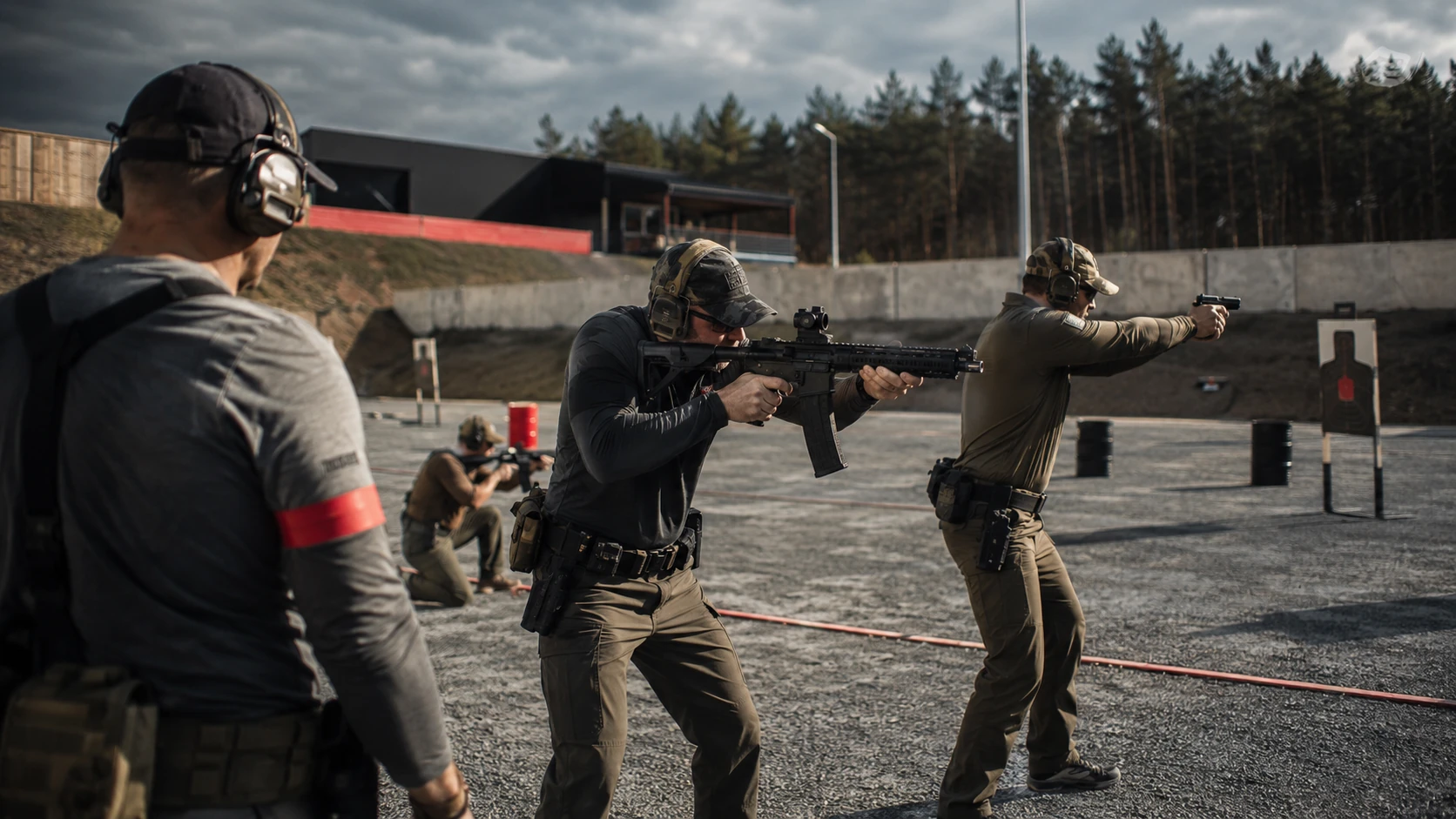
Hand-to-hand and vehicle elements
Protective work often begins at a distance where a firearm is not the immediate solution. The course includes shielding, takedowns, movement of the principal and team-based responses to unarmed and armed attacks.
Vehicle drills teach participants how to enter and leave a vehicle efficiently, maintain the protective formation and respond when the route or vehicle becomes part of the threat scenario.
Tests and completion standard
The original programme described four principal assessments: close protection theory, an attack-on-principal practical drill, a shooting test and a hand-to-hand protective techniques test. Students must also demonstrate safe behaviour throughout the course.
Successful participants receive a BZ Academy International Certificate confirming the course completed and assessments passed. The certificate does not replace any government qualification required for employment in a specific country.
Recommended preparation and equipment
The mandatory personal equipment is intentionally limited because BZ Academy supplies the course firearms and core range equipment. Participants should bring practical outdoor clothing, suitable footwear and trousers that can support a tactical belt.
Good pistol fundamentals are strongly recommended. Completing a Tactical Pistol, Combined Firearms or equivalent course beforehand allows the participant to focus more fully on the protective application rather than basic manipulation.
Armed close protection requires more than shooting skill
The value of the programme is the integration of planning, teamwork, protective movement, vehicles, firearms, defensive tactics and medical response. These elements must work together under pressure.
Before pursuing armed work, always verify the licensing, employment and firearms rules of the country in which you intend to operate.